
Office Address
Ist Floor, 38 N, Shree Balaji Tower Hisar
Phone Number
+91 98965-80000
Email Address


Ist Floor, 38 N, Shree Balaji Tower Hisar
+91 98965-80000


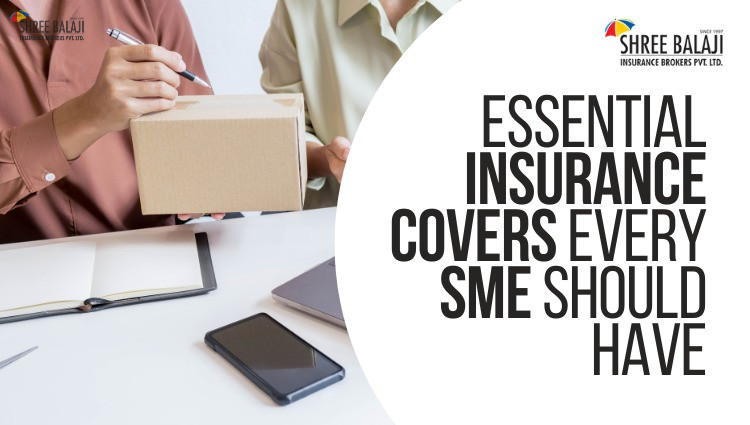
 by Anand Prakash Gupta
Small and Medium Enterprises, commonly known as SMEs, form the backbone of India’s economy. From manufacturing and retail to logistics, technology, healthcare, and services, SMEs contribute significantly to employment generation and economic growth. While businesses focus heavily on expansion, revenue, operations, and customer acquisition, one critical aspect often gets overlooked: business insurance protection.
Running an SME comes with opportunities, but it also brings risks. A fire at a warehouse, cyberattack, employee injury, legal dispute, or business interruption can significantly affect operations and financial stability.
This is where having the right insurance coverage for SMEs becomes essential.
The right insurance strategy is not just about protection from losses. It is about ensuring business continuity, long-term growth, and peace of mind.
In this blog, we explore the essential insurance covers every SME should have and why these policies are becoming increasingly important in today’s business environment.
Table of contents [Show]
Many small businesses view insurance as an additional cost rather than a business necessity. However, unexpected events can create financial stress that smaller organisations often find difficult to absorb.
The right SME insurance solutions can help businesses:
Insurance should be seen as a strategic investment rather than an expense.
One of the most important policies for any business is commercial property insurance.
Property insurance protects:
Businesses face risks such as:
For SMEs with physical infrastructure and inventory, property insurance for small businesses acts as a financial safety net.
Fire-related incidents can result in significant losses for businesses.
Fire insurance coverage for SMEs protects against damages caused by:
For manufacturing units, warehouses, retail stores, and offices, this cover is particularly important.
A single incident can disrupt operations for weeks or even months, making fire insurance a fundamental requirement.
Businesses interact with customers, vendors, partners, and employees every day.
This creates potential legal risks such as:
Business liability insurance helps cover legal expenses and compensation costs.
Different types of liability insurance include:
Provides protection against claims made by third parties.
Protects service-based businesses against errors and omissions.
Essential for businesses involved in manufacturing and product distribution.
As legal awareness increases, SME liability insurance coverage is becoming increasingly important.
Employees are one of the most valuable assets for any organisation.
Offering group health insurance for SMEs helps businesses:
Health insurance plans may include:
For smaller businesses competing for talent, employee health benefits can create a significant advantage.
Businesses with employees working in factories, warehouses, construction sites, and operational environments face workplace risks.
Workers compensation insurance covers:
This cover protects both the employee and the employer.

Businesses involved in logistics, trading, imports, exports, or transportation require marine cargo insurance.
This policy protects goods against:
Supply chains today are more complex and interconnected than ever before.
Without adequate transit insurance for SMEs, disruptions can lead to financial losses.
Many businesses insure physical assets but forget to protect their income streams.
Business interruption insurance compensates for:
For example:
A fire damages a manufacturing facility and operations stop for two months.
Property insurance may repair the facility, but business interruption coverage helps sustain financial stability during downtime.
As SMEs increasingly adopt digital platforms and cloud technologies, cyber threats are becoming more common.
Common cyber risks include:
Cyber insurance for SMEs helps businesses recover from financial and operational losses caused by cyber incidents.
Coverage may include:
Digital transformation has made cyber insurance a growing necessity rather than an optional cover.
Senior management decisions can sometimes lead to legal claims.
Directors and Officers Insurance, commonly known as D&O Insurance, protects company leaders against:
For growing SMEs seeking investments or expansion opportunities, this policy can be highly valuable.
Many SMEs depend heavily on founders or key individuals whose expertise drives business growth.
Keyman insurance provides financial support if an important employee or business leader suffers an unexpected event.
This helps businesses manage:
Financial disruptions
Selecting the right business insurance policy for SMEs requires careful evaluation.
Different sectors face different challenges.
For example:
Coverage requirements vary depending on employee strength, assets, and operations.
Insurance planning should support long-term expansion plans.
Insurance brokers help businesses identify risks and customise solutions based on specific requirements.
Many SMEs make avoidable mistakes such as:
A balanced approach is necessary for effective risk management.
As businesses become more technology-driven and interconnected, the insurance landscape is also evolving.
Emerging trends include:
The future of SME insurance in India is moving towards smarter and more flexible solutions.
Running a successful SME is about managing opportunities and risks together.
While growth strategies help businesses move forward, insurance ensures they remain protected when unexpected challenges arise.
From property insurance and liability insurance for SMEs to cyber insurance and business interruption coverage, having the right mix of policies strengthens operational resilience and long-term stability.
Insurance is not simply about recovering from losses. It is about creating confidence, continuity, and sustainable growth.
For SMEs looking to build a stronger future, investing in the right insurance coverage is one of the smartest business decisions they can make.