
Office Address
Ist Floor, 38 N, Shree Balaji Tower Hisar
Phone Number
+91 98965-80000
Email Address


Ist Floor, 38 N, Shree Balaji Tower Hisar
+91 98965-80000


 by Anand Prakash Gupta
Global trade rarely pauses, even in times of geopolitical tension. Yet when conflict begins to threaten critical shipping routes, the ripple effects can be immediate and severe. This is exactly what the world is witnessing as the Iran conflict intensifies, pushing shipping risks to new highs and forcing countries like India to step in with bold policy measures.
India’s proposed sovereign guarantee for insurers is not just a financial intervention. It is a strategic move to stabilise maritime trade, control rising insurance costs, and safeguard energy security. Let us break down what this means, why it matters, and how it could reshape global shipping dynamics.
Table of contents [Show]
India is planning to introduce a sovereign guarantee fund to support insurers providing war risk insurance for ships operating in high-risk zones. This comes at a time when insurers are either drastically increasing premiums or withdrawing coverage altogether due to escalating tensions near Iran.
A sovereign guarantee essentially means that the government backs insurers against extreme losses. In this case, it allows insurance companies to continue offering coverage despite rising geopolitical risks.
This move directly impacts key areas:
Marine insurance stability
War risk insurance availability
Shipping continuity in conflict zones
Reduced dependence on global reinsurers
Without such intervention, shipping companies may struggle to secure insurance, leading to halted operations and disrupted supply chains.
The Iran conflict has significantly increased risks across one of the world’s most crucial maritime routes, the Strait of Hormuz.
The Strait of Hormuz handles a substantial portion of global oil shipments. Any instability here affects:
Crude oil supply chains
Global energy prices
Shipping routes and transit times
With threats such as missile attacks, naval confrontations, and underwater mines, insurers are categorising the region as high risk.
One of the most immediate consequences has been the sharp rise in war risk insurance premiums.
Premiums have increased multiple times over
Some insurers are refusing coverage entirely
Shipping companies face higher operational costs
This creates a domino effect where increased shipping costs lead to higher fuel prices and inflationary pressures worldwide.
India’s response is both proactive and calculated. The government aims to ensure that Indian shipping companies and oil imports remain unaffected despite global uncertainty.
The plan includes two key financial layers:
Estimated at around 1.5 billion dollars
Acts as a financial safety net for insurers
Encourages continued underwriting of high-risk policies
Around 300 million dollars
Designed to absorb large claims
Strengthens domestic insurance resilience
This dual structure ensures both immediate support and long-term sustainability.
India is one of the largest oil importers in the world. A major portion of its crude oil supply passes through conflict-prone regions near Iran.
With insurance in place:
Ships can continue operations without fear
Oil imports remain stable
Supply chain disruptions are minimised
Without such measures, even a temporary halt in shipping could lead to fuel shortages and price spikes.
Energy prices influence almost every sector of the economy. By stabilising shipping:
Fuel prices remain relatively controlled
Transportation costs do not surge drastically
Inflationary pressure is reduced
This makes the sovereign guarantee not just a maritime policy but an economic safeguard.
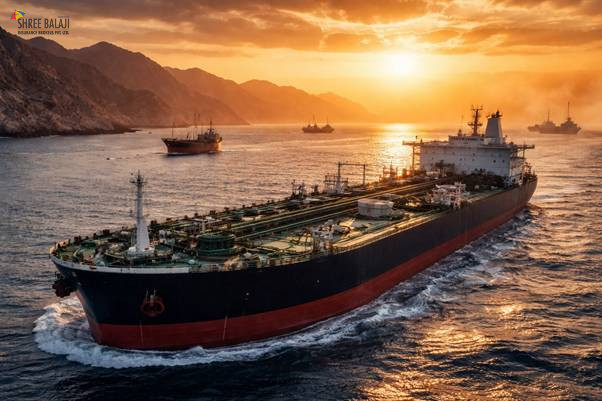
India is not alone in facing these challenges. The global shipping industry is already adapting to the evolving situation.
Shipping companies are:
Avoiding high-risk zones where possible
Taking longer alternate routes
Facing increased fuel and operational costs
These adjustments lead to delays and increased freight charges.
Insurers worldwide are becoming cautious:
Limiting exposure to conflict regions
Increasing scrutiny on policies
Raising deductibles and premiums
India’s move could set an example for other nations dealing with similar risks.
Marine insurance plays a critical role in enabling global trade. Without it, shipping operations would come to a standstill.
Every commercial vessel requires insurance for:
Cargo protection
Vessel damage
War and conflict risks
Ports and regulatory bodies often require proof of insurance before allowing entry.
If insurers withdraw:
Ships cannot legally operate
Trade routes collapse
Supply chains break down
India’s intervention ensures that this worst-case scenario is avoided.
Understanding the importance of the Strait of Hormuz helps explain the urgency behind India’s decision.
Handles nearly one-fifth of global oil supply
Connects major oil-producing nations to global markets
Essential for Asian economies including India
Any disruption here has global consequences.
The region has always been geopolitically volatile. The current Iran conflict has only intensified concerns, making risk mitigation strategies more important than ever.
India’s move could reshape how countries deal with shipping risks during geopolitical crises.
Reduces reliance on foreign reinsurers
Builds local capacity in marine insurance
Encourages innovation in risk management
Other countries may adopt similar models to:
Protect their trade routes
Stabilise insurance markets
Ensure economic continuity
This could lead to a shift towards more government-backed insurance frameworks globally.
While the plan is promising, it is not without challenges.
Backing insurers means the government may have to:
Bear significant losses in case of major incidents
Allocate large financial resources
The Iran conflict timeline remains unpredictable. Prolonged instability could:
Increase claims
Strain the insurance pool
Test the sustainability of the fund
Despite these challenges, the benefits appear to outweigh the risks.
India’s sovereign guarantee for shipping insurance is a timely and strategic response to a rapidly evolving global crisis. By stepping in where private insurers are hesitant, the government is ensuring that trade routes remain active, oil supplies stay uninterrupted, and economic stability is preserved.
In a world where geopolitical tensions can disrupt supply chains overnight, such proactive measures are not just beneficial, they are essential. As the Iran conflict continues to impact global shipping, India’s approach may well become a blueprint for resilience in uncertain times.
The message is clear. When risks rise beyond the capacity of private markets, strategic government intervention can keep the wheels of global trade turning.